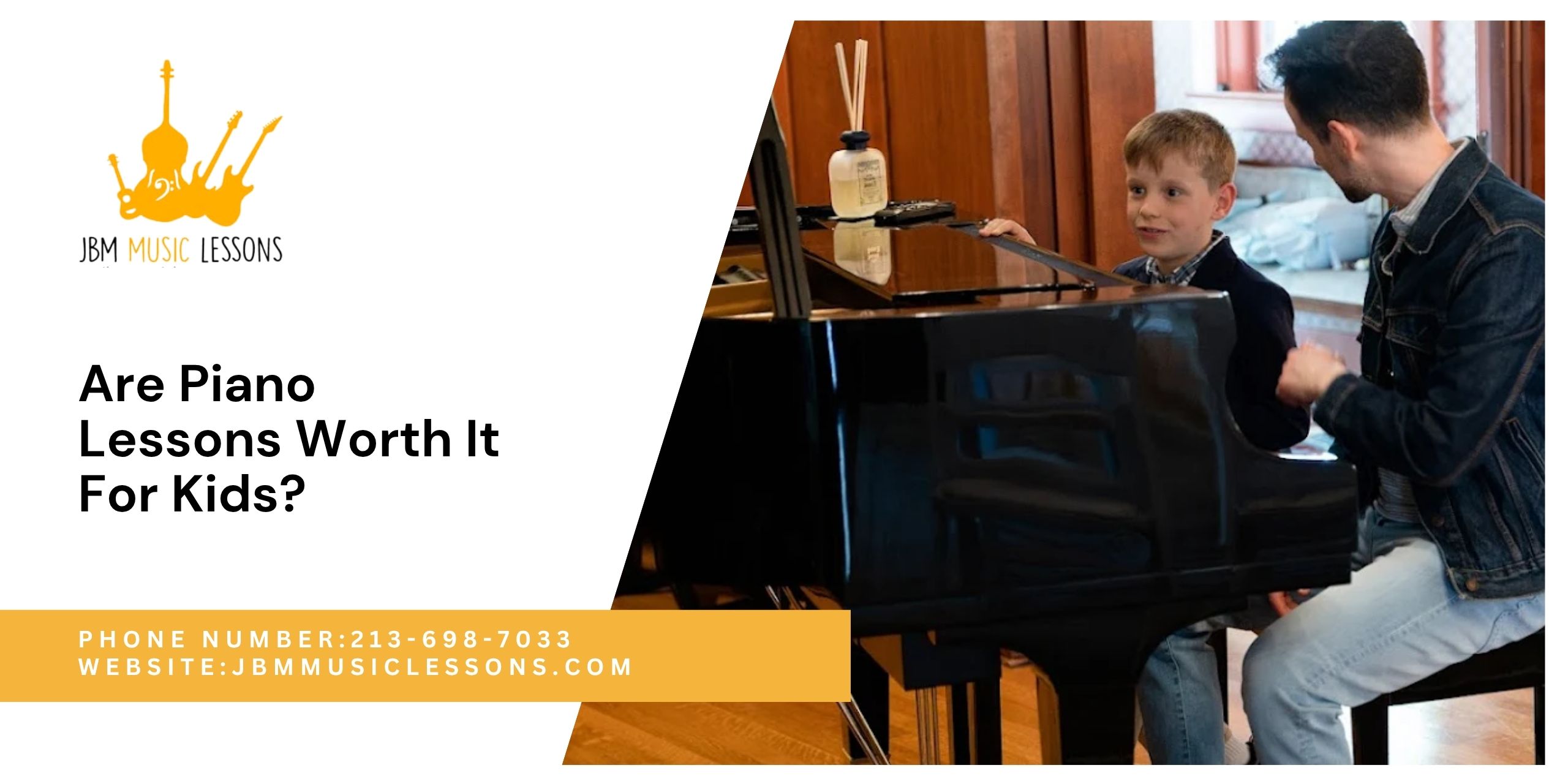
Learning to play the piano can be a fun and rewarding activity that children carry with them throughout their lives. Of course, learning any instrument doesn’t come without challenges. Today’s busy parents often wonder if enrolling their child in piano lessons is worth the cost, time commitment, and occasional practice-time meltdowns.
So, are the piano lessons for kids in Los Angeles worth it? The short answer: YES, learning the piano offers numerous benefits, and many families agree that lessons are worth every penny! That said, it’s important to consider your child’s individual readiness, as success depends on having a genuine desire to focus and learn.
In this post, we’re going to unpack the benefits of piano lessons for kids, when lessons might not be worth it for your child, and at what age to start.
Table of Contents
ToggleAre piano lessons worth it for kids?
Yes, piano lessons by a professional Piano instructor in LA are widely considered a worthwhile investment for kids, teenagers and adults due to a wide range of cognitive, emotional, and physical benefits, which are strongly supported by scientific research.
Let’s take a closer look at some of these benefits:
1. Cognitive Development
Learning the piano strengthens memory, pattern recognition, and concentration. Piano lessons won’t magically make your kid smarter, but they do tend to enhance problem-solving skills, language skills, and even mathematical reasoning. Playing the piano activates multiple areas of the brain simultaneously, essentially giving your child a “full brain workout”!
2. Discipline and Perseverance
Piano lessons naturally teach children that progress doesn’t happen instantly, that it’s a result of patience, practice, perseverance, and time. Learning the piano helps kids set goals and work through difficulties and frustration to achieve them. These skills can carry over into school and many other aspects of life!
3. Emotional Well-Being
Music provides a powerful emotional and creative outlet. Learning the piano can reduce stress and anxiety while boosting confidence and self-esteem. For many children (and adults), these emotional and mental benefits can be just as, or more, important than the cognitive ones.
4. Physical Benefits
Playing the piano provides real physical benefits, especially for growing children. It can improve fine motor skills, hand-eye coordination, posture, core strength, finger strength, reflexes, and dexterity. The physical benefits of piano are greatest when lessons emphasize proper technique.
5. A Musical Foundation
Even if your child doesn’t stick with piano forever, early lessons build a strong musical foundation, which can make it easier to learn other instruments or return to the piano at another time. Your child doesn’t need to become a professional pianist to enjoy a lifelong appreciation for music!
When might piano lessons NOT be worth it?
While piano lessons can be incredibly beneficial, they aren’t always the right fit for every child. Piano lessons might not be worth it if:
- Your child is strongly resistant or has no desire to learn piano.
- Your child’s schedule is too overwhelming, with schoolwork, sports, or other activities taking priority.
- Lessons or practice sessions consistently cause anxiety, tears, meltdowns, or major battles.
- Your child is not developmentally ready for structured piano lessons yet.
- Your piano instructor is overly rigid, impatient, or unable to connect with your child.
The value of piano lessons for your family can depend on timing and interest. If lessons are not a good fit right now, waiting until your child is ready or a good teacher is available can make the experience far more positive and successful.
What’s the best age to start piano lessons?
Many experts agree that the best age to start piano lessons is between 5 and 9 years old, but the truth is, there is no “right” answer, and readiness matters more than age. Some children may have developed the skills required before age 5, while others thrive when they start a little later. Here are a few signs to look for:
- Physical Readiness: Your child will need to be able to place five fingers on five white keys and be able to move each finger independently. This is tough for many five-year-olds!
- Desire to Focus and Learn: Learning to play piano requires time and practice. A child’s interest and enthusiasm are crucial for their success and enjoyment!
For many children, piano lessons are absolutely worth it. Learning piano builds many skills that can last a lifetime! For more information or to enroll your child, contact me today at JBM Music Lessons in Los Angeles.