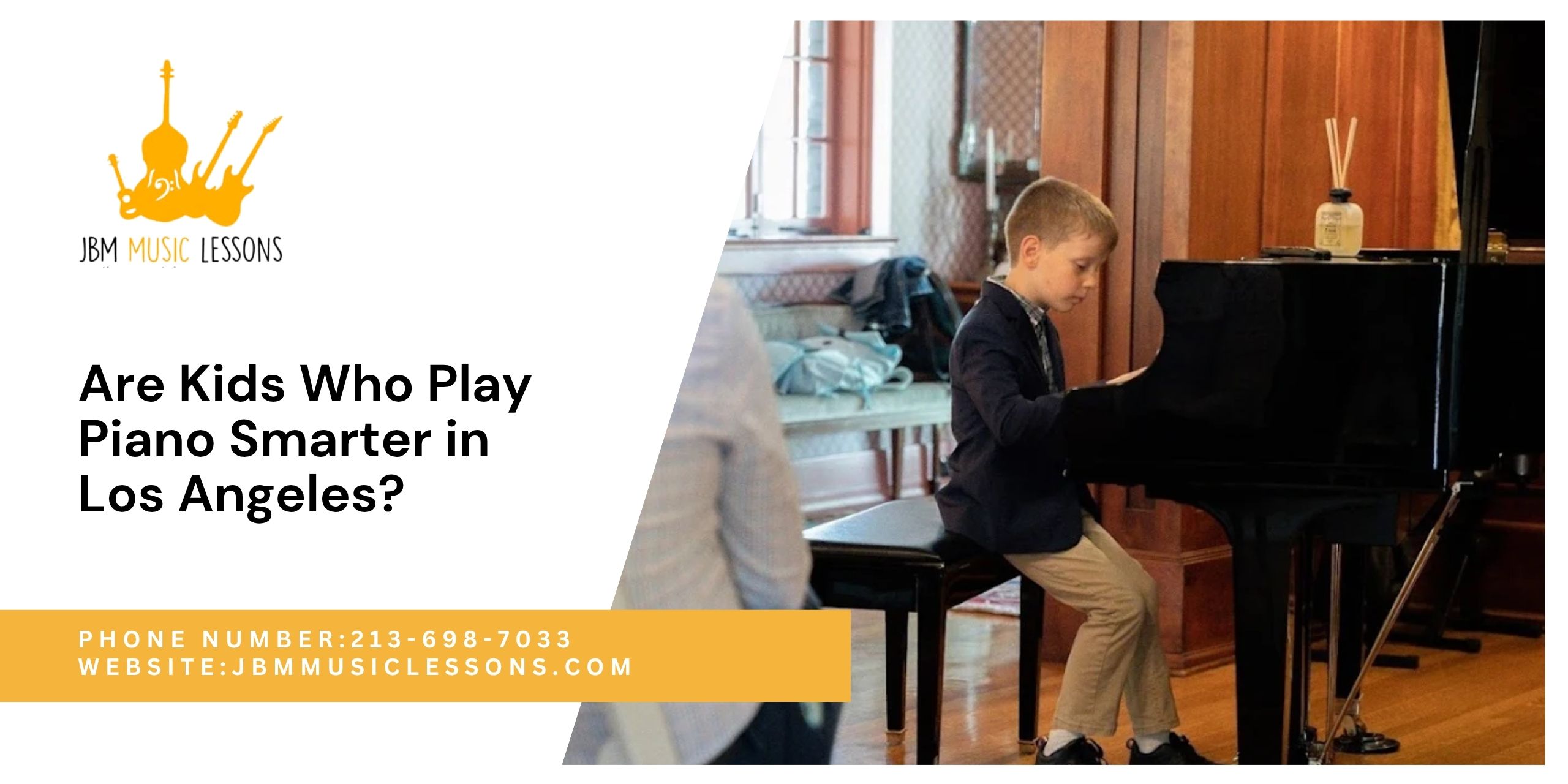
Many parents wonder if music lessons will give their children an academic advantage. Piano, in particular, is associated with improved memory, focus and discipline. But does it actually make kids smarter? The answer isn’t as simple as yes or no. While learning the piano won’t guarantee a “smarter” child, studies suggest that piano lessons do support important cognitive skills and neurological development. In other words, playing piano can help children develop important learning skills as they grow.
In this post, we’ll take a closer look at the benefits of piano lessons for kids in Los Angeles and how they may help support your child’s academic success.
Table of Contents
ToggleAre kids who play piano smarter?
Piano lessons don’t automatically make kids “smarter,” but learning piano is a complex activity that strengthens neural pathways and activates multiple areas of the brain at once. In fact, studies suggest that playing piano enhances brain development in a way that few other activities do. Piano lessons are widely associated with a range of cognitive benefits and children who learn piano often show improvements in areas like:
1. Memory
Playing piano strengthens both short-term and long-term memory. When learning a new piece of music, children must remember notes, rhythms, finger placements, and musical dynamics. They may even begin to memorize entire songs! Over time, your child’s brain develops the ability to hold and process information more efficiently.
2. Concentration and Focus
Learning piano from a reliable LA teacher requires sustained attention, mental coordination and discipline. When children sit down at the piano, they have to concentrate on several things at the same time and this focused practice trains the brain to stay engaged with a task for longer periods. This repeated mental effort can help improve their ability to concentrate on other tasks, including homework and classroom learning.
3. Pattern Recognition
Pattern recognition is the ability to notice repeating structures or sequences. Music is naturally built on patterns. When children learn piano, they begin to notice repeating note sequences, rhythms and chord progressions, strengthening a skill that is also important in school subjects like math and reading.
4. Problem-Solving Skills
Learning the piano can be challenging and each piece of music presents technical difficulties. When a child struggles with a difficult piece or passage, they learn to slow down, break the problem into smaller pieces and practice strategically. This process encourages analytical thinking and problem-solving, skills that carry over to academic learning and real-life challenges.
5. Brain Connectivity and Multitasking
Learning piano is one of the best ways to strengthen brain connectivity! It requires both hands to perform different actions at the same time (usually one hand plays the melody while the other plays a chord or bass line). Your child’s brain has to coordinate these movements, sending signals across the left and right hemispheres, all while processing what they see and hear. Essentially, while playing piano, kids are performing multiple tasks at once: reading music, controlling hand movements, keeping rhythm, and listening to themselves play.
Do piano lessons improve grades?
Learning piano can help improve school grades, but this is not a guarantee. Research does show that children who take music lessons often perform slightly better on certain cognitive tests and school assessments, especially in subjects like math and reading.
However, academic performance and school grades still depend on several other factors, including teaching quality, school environment, personal interests and support at home.
In other words, piano lessons won’t automatically make your child a straight-A student, but they do help strengthen skills and habits that support academic success.
How important is piano practice at home?
Very important! A piano instructor will introduce new concepts and give guidance during lessons, but home practice is where the real growth happens. Without regular piano practice, children may struggle to improve steadily or retain what they’ve learned.
For young beginners learning piano, aim for 10-15 minutes of daily practice. Remember that consistency is more important than the length of time your child spends at the piano and short, frequent sessions are more effective than long, irregular ones.
Learning the piano might not make your child smarter overnight, but it does help them develop important cognitive skills that support learning and growth. If you’re ready to give your child the gift of music and all the benefits that come with it, contact me today at JBM Music Lessons in Los Angeles.